
One question we get a lot here at AmmoSquared is, “Does ammo have a shelf life?” The simple answer is no, but the caveat is that you must store it properly.
Ammunition in proper storage conditions can last decades without significant loss of performance or reliability. However, if your ammunition is stored in adverse conditions, its lifespan will be drastically reduced.
The key to storing your ammunition properly is to keep it away from moisture, cleaning solvents, and penetrating oils. In this article, we will go over the basics of ammunition storage and how you can protect your ammo investment with a few simple storage tips.
What makes ammo go bad?
There are three primary enemies you need to combat when it comes to keeping your ammo fresh and fully functional: moisture, penetrating oils, and copper cleaning solvents.
Moisture
Ever hear the phrase, “Keep your powder dry”? There’s a reason they say that, because wet powder won’t ignite no matter how many times you pull the trigger.
Although most ammo manufacturers do a great job these days of sealing primers and case mouths, there’s not much that can be done if your ammo is constantly exposed to moisture.
Moisture attacks your ammo on two fronts, first being corrosion. When constantly exposed to moisture, brass-cased ammo will begin to corrode at an alarming rate. Corroded cases present multiple problems.
If the corrosion is bad enough, the rounds might not even chamber in your firearm. However, the worst-case scenario is that the case will be weakened enough to cause a case rupture, which is an extremely dangerous situation that can damage your firearm and/or the shooter.
Furthermore, depending on the length of time and levels of moisture incursion into your ammo stores, the powder inside the case could also become wet and degrade over time. This would severely diminish your ammo’s performance if not rendering it completely useless.
Without question, moisture is the #1 enemy of ammo longevity.
Copper Cleaning Solvents
Although it's common practice to store your solvents and ammo away from each other, some shooters don’t have a lot of space to work with (think apartments or RV’s) and need to store all their shooting supplies in close proximity.
Copper cleaning solvents are particularly nasty when it comes to your ammo due to the nature of how the solvents work.
Copper solvents remove copper deposits from your barrel using a process known as chelation. Chelation is a fancy chemistry term that refers to a process of chemically binding a solvent to a metal.
This is great when you want to clean the bore of your favorite semi-auto or bolt-action rifle, but not so great when combined with your ammo.
Brass cases are made up of about 70% copper and 30% zinc, both are metals that copper cleaning solvents love to remove. If stored together the copper cleaning solvent can, over time, damage your brass cases making them brittle.
When fired, the potential for a slip case is increased. This isn’t horrible if you don’t plan to reload your cases, however a case rupture could also occur which is an extremely dangerous and potentially life-threatening situation.
Penetrating Oils
Like solvents, penetrating gun oils are great for your firearm but not so great for ammo storage. Oils keep metal parts free of corrosion and are excellent at preserving your prized handgun and rifle collection.
However, ammo and oil simply don’t mix.
When stored with your ammo, oils can work their way into the primers of your favorite rounds. Over time, the oils can reduce the effectiveness of primers to the point of making them inert.
Oil incursion into your gunpowder can reduce its effectiveness to the point of not even firing or causing a squib.
A squib is a bullet that doesn’t have enough power behind it to exit the barrel. This causes a barrel obstruction which, if a live round is fired behind it, can destroy your firearm and/or cause bodily damage to the shooter.
What could happen if you try to fire old ammunition?
Most of the time it will go “bang” and you’ll have a smile on your face. A few of us have fired ammo that was made in the 1960’s without a single issue. However, all this ammo was stored properly and had no signs of corrosion (yes, pulled it out of a spam can).
If you find a box of old ammo in grandpa’s basement or stumble across a box or two in the back of your closet that you thought you lost, the best thing you can do is inspect the ammo before firing it.
Looking for signs of corrosion is the best practice when firing older ammo as this will be the easiest thing to spot. If your rounds are heavily corroded, it’s probably best to just dispose of those rounds in a safe manner and not fire them.
If the rounds look like they are in decent condition, then there’s no reason you can’t fire them. However, when you are at the range shooting older ammo, take care and be mindful of how the rounds are performing in your firearm.
If any of the ammunition feels weak or something just “doesn’t feel right” stop shooting immediately, clear your firearm, and check the barrel for obstructions. Please don’t look down the barrel from the muzzle end unless you want to get chewed out by the RSO!
What’s the best way to store your ammo?
With all that in mind, We’re sure you’re still wondering what’s the best way to store your ammo. There are several different methods you can employ so pick the one that best suits your needs, storage space, and budget.
First and foremost, you want to store your ammo in a cool, dry place away from moisture and the direct sunlight.
This makes storing ammo in a storage unit, car trunk, shed, or garage less than ideal as these areas often experience wild temperature swings and typically are full of moisture depending on your local climate.
Storing your ammo inside your home is the best option as temperature swings are typically less pronounced and moisture can easily be controlled.
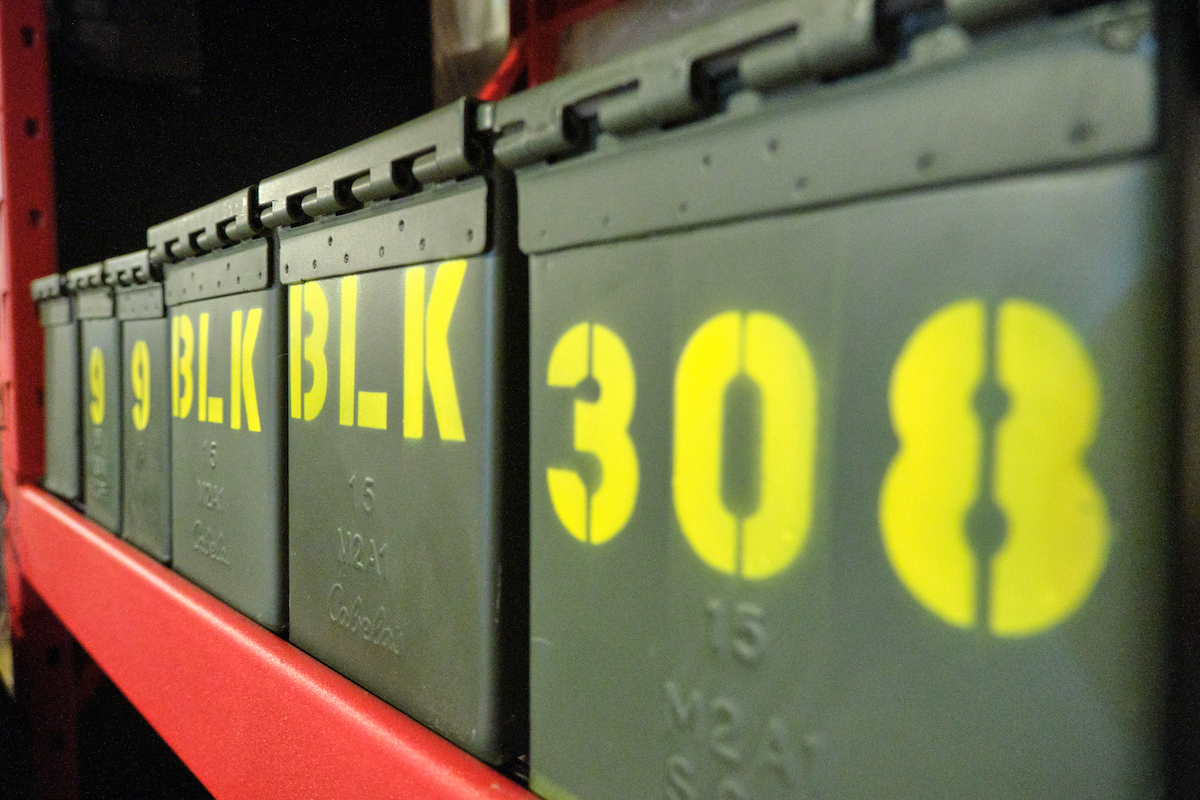
However, the next question that comes up is what you should store your ammo in. Our suggestion is to use military surplus 50-cal ammo cans. These cans are designed for ammo storage and are extremely rugged and easy to find at your local gun store or almost anywhere ammo is sold.
Before you buy, just check to ensure that the rubber seal along the lid is in good condition and not cracked. When you load up an ammo can, make sure to throw in a package of silica gel desiccant to ensure all the moisture is removed while your ammo sits in storage.
Plastic ammo cans are another option, however we’re not as fond of these as they can crack pretty easily and don’t stack as well as traditional military ammo cans.
The final method is to keep your ammo in its original box and store it somewhere in your home away from moisture, like in the back of a closet that isn’t near a bathroom. Although this is the least desirable option, it can work if you take steps to remove humidity in the area by using a dehumidifier.
Parting Shots
Keeping your ammo stored properly is the best way to ensure that it will function flawlessly when you need it most. So long as you keep moisture, oil, and chemicals away from it, your ammunition stockpiles might outlast you!
By following the storage instructions in this guide, your ammo will be punching holes through paper for years to come.
However, if you’re strapped for space and want someone else to ensure that your ammo is stored properly and ready to ship to your door in a moment’s notice, then make sure to check out AmmoSquared and get your ammunition stockpiles squared away for when you need it most.